THE OPPORTUNITY TO COMMUNICATE IS A BASIC HUMAN RIGHT.
We aspire to a society in Aotearoa New Zealand, where everyone understands what communication accessibility is. Talking about it, celebrating it, and letting people know when they are getting it right will bring our vision to life!
Communication is the most fundamental of human capacities and a basic human right. People need to be able to communicate to fulfil their social, educational, emotional, and vocational potential.
Communication access is about creating communication ramps to ensure people can participate fully in their whānau, communities, workplaces, and schools and be fully involved in decisions affecting all aspects of their lives.
This award is presented by the NZSTA and the Minister of Disability Issues to individuals and organisations.
Selection criteria
The nominee is an individual or a group/organisation demonstrating communication access principles.
- Awareness: Recognition and knowledge about communication and communication disability.
- Attitude: Acknowledging competence and all aspects of communication. A willingness to help and give time.
- Competency: Uses active listening skills, gives time to respond, and uses communication tools. Uses the best approaches to communication with all individuals. Supports individuals to be involved in decisions. Supports individuals to communicate successfully.
- Information: People receive information in a way they can access and understand, e.g. easy-read formatting.
- Environment: Organisations provide clear signage. Opportunities are provided for face-to-face communication. Communication tools are available or utilised. Noise levels and lighting are considered.
Nominations for the Communication Accessibility Award will be called for annually in September and close on 31 October.
Congratulations to the 2025 award recipients:
Paula Love - for:
- Excellent awareness of the communication needs of ākonga with additional needs is consistently demonstrated, with empathy and respect shown and the competence of individuals and expertise of team members acknowledged.
- Professional learning has been planned and delivered to model active listening, allow time for responses, and integrate AAC into daily routines, while shared decision-making is championed so ākonga can express their views and participate meaningfully in their education.
- AAC information is made accessible by drawing on speech-language therapist expertise, and the physical environment is influenced to support communication through strong advocacy for the availability of communication tools.
Ilana Edlin & Rachael Brodie - for:
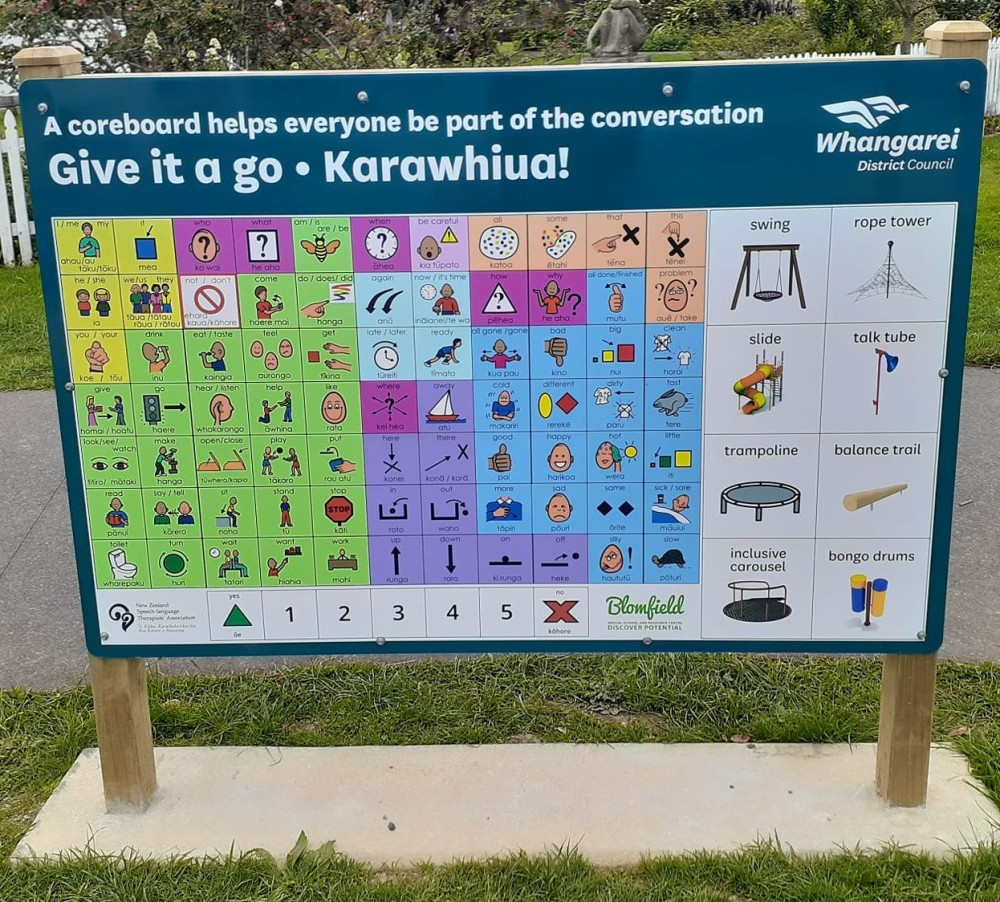
- Heart and passion have been shown in initiating a community project to introduce core boards into the Mataura/Gore area, guided by the principle, “We could just do it, or we could do it well,” and grounded in liaison with tangata whenua to ensure local kupu and appropriate locations.
- Speech-language therapists have been inspired, community-specific dialect and fringe vocabulary have been prioritised to foster pride and ownership, the six-month project has been handed over to local communities, and the nationwide goal of making core boards available in public spaces across Aotearoa New Zealand has been actively supported.
Mane Allen - for:
- Advocacy for clients’ communication needs has been consistently demonstrated since 2020, with many CA strategies incorporated into practice, including clear language, accessible written information, visuals, and sensory supports.
- Support has been provided to prepare clients for legal matters, including multiple sessions when needed, and communication strategies have been applied to enhance CA effectiveness for those with significant needs while enabling more independent participation for others.
- Resources such as easy-to-read documents have been shared, and key stakeholders in the Youth Court and wider Justice system have been reminded of the importance of accessible information.
Award Recipient of Previous Years
2024:
Sarah Mandeno
Kris Tynen & Tim Webster, Exercise as Medicine NZ
2023:
Judge Hana Ellis
Emporio Coffee
Dani Tyler
Julie Wylie and Ngaio Marsh Rest Home
2022:
Judge John Walker
Kristina Pinto
Papanui Primary School
Saoirse O'Connor
Sarah Dann-Hoare - Project Employ/Flourish Cafe
2021:
Kitty Zeng
Liz Ballantine, Clinics Receptionist, University of Auckland
Papanui Primary School – Lisa Thompson (SENCO)
Sarah Goodfellow
Ruth Blair
Sarah Price, occupational therapist at CCS Disability Action, Canterbury
Seiola Tapa
Robyn Thomas & Heather Orman, St Andrew’s College, Christchurch
Wellington Airport
2020:
Jennie McCormick
Northland Indian Association (Ralph Correa, Board Chair)
Whakatohea Iwi Trust Board
Dementia Canterbury, Manager Darral Campbell
Paula Tesoriero, Disabilty Rights Commissioner
2019:
Aimee Taylor
Andrew Stubbs, Vanessa Hendry, Ness Ahkiong, Steve Nippert, & Wendy Wimsett
Coffee Culture in Lincoln
Dr Ciandra Keenan
Dr Meera Raithatha
Hannah Barnes
HOYTS Cinemas
Hutt Hospital Café
Jocelyn Faalavelave
Mike Dyer
NZ Police
Pataka Art & Museum
Pukeahu National War Memorial Park (Dr. Emma Kelly, Paul Riley, Tim Hurd)
Sian Van Dyk
Station One Cafe
Teacher Aides at Dargaville Primary School
Youth Horizons Trust
Zampelles Cafe – Queensgate Mall